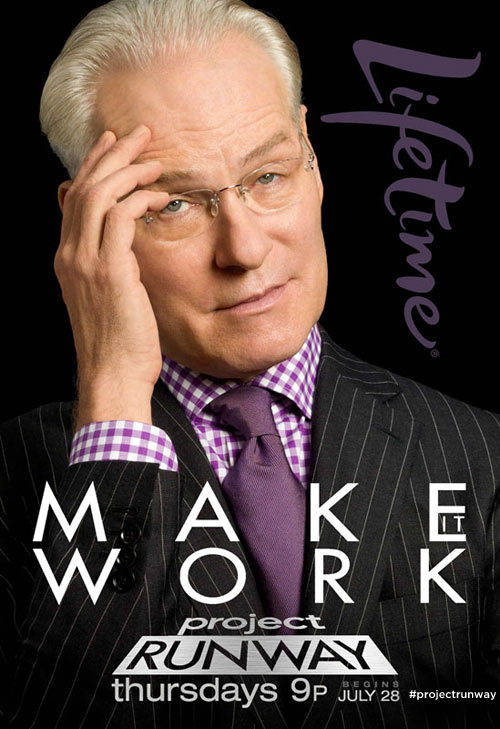
 On a scale of one to ten, my interest in fashion is probably around a two, and yet I’m addicted to PROJECT RUNWAY, a TV reality show competition for fashion designers. As a writer, I relate to the creative process and the creative challenges the designers face. Last year, as a Pitch Wars mentee, I was struck by the parallels between this writing competition and Project Runway.
These competitors are chosen from a pool of thousands of hopefuls. Obviously, they are mega-talented and dedicated to their craft, the best of the best, and yet …
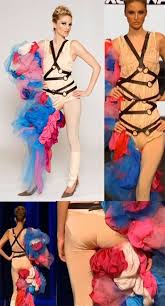
. They can totally blow it. Think your manuscript sucks? Wow, you should see the horrific designs some of these uber-talented designers have sent down the runway.
. They can be SO close, but still “miss the mark.” Sometimes a detail that’s not-quite-right ruins the whole “look.” Editing needed!
. They can create a stunning masterpiece that’s the “winning look” and then land in the bottom, in danger of being eliminated, in the very next challenge. Creating something that sucks doesn’t mean you suck. Try again. As supermodel host and judge Heidi Klum always says, “One day you’re in, and the next you’re out.”

. They can be sabotaged by their own self-doubt which can spiral into a paralyzing inability to create anything of worth. Conversely, sometimes over-confident arrogance makes a designer blind to obvious flaws in their work. Sound familiar?
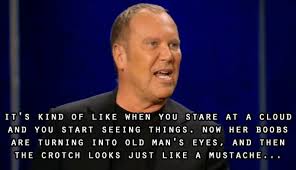
. They can struggle with feedback and criticism. (If you think rejection letters are bad, you should see some of the criticism the Project Runway judges dish out while the contestants stand humbly before them with nowhere to hide. I don’t think I could ever develop a thick enough skin to stand and face the criticism of Nina Garcia.) Some designers use feedback to hone their vision and put forth the best version of their concept; others ignore valuable criticism that could have saved a design-gone-wrong, and still others let it derail their vision, leading to a half-baked compromise.
Some concepts that play a key role, time and time again, in Project Runway (and any creative endeavor):
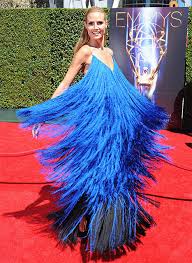
Subjectivity. More often than not, the judges are in agreement, but sometimes they’re not. Sometimes I agree with them; sometimes I’m way off. (I know nothing about fashion, but I still have opinions!) And once in a while a contestant creates something so mind-blowingly amazing that subjectivity doesn’t seem to exist. That’s what we all strive for.
Balance. There’s a lot about creating fashion that requires balance. (And the same can be said about writing—and life—for that matter!) The balance between …
. (As designer/judge Zac Posen likes to say) Art and commerce
. Sticking with your vision … and letting your vision be guided by others
. Confidence … and self-criticism
. Planning … and spontaneity
. Too “safe” … or too “out there.”
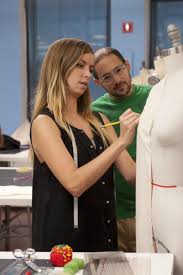
Peers. In spite of jealousy, mean-spirited comments, derision, clashing visions or working styles, it’s obvious that, for the designers of Project Runway, being amongst highly-talented peers is a priceless form of support and inspiration. The same holds true for writers. (Thank you writer-friends, Pitch Wars, and the 2014 Table of Trust!)
Make it Work. Words I come back to over and over again, when writing, revising, whatever the problem, challenge, struggle, doubt, I’m facing. The bottom line, if you’re going to create something, you’ve just got to “Make it work!”
(Thank you, Tim Gunn, and all of Project Runway, for the inspiration!)



I used to be such a Project Runway junkie, so I love all the parallels you’ve drawn here!
LikeLike
Thanks, Jocelyn! Yes, I’m still a junkie, having recently discovered past seasons I hadn’t yet seen. 🙂 And (trying to hook you again) the current season is great!
LikeLike